


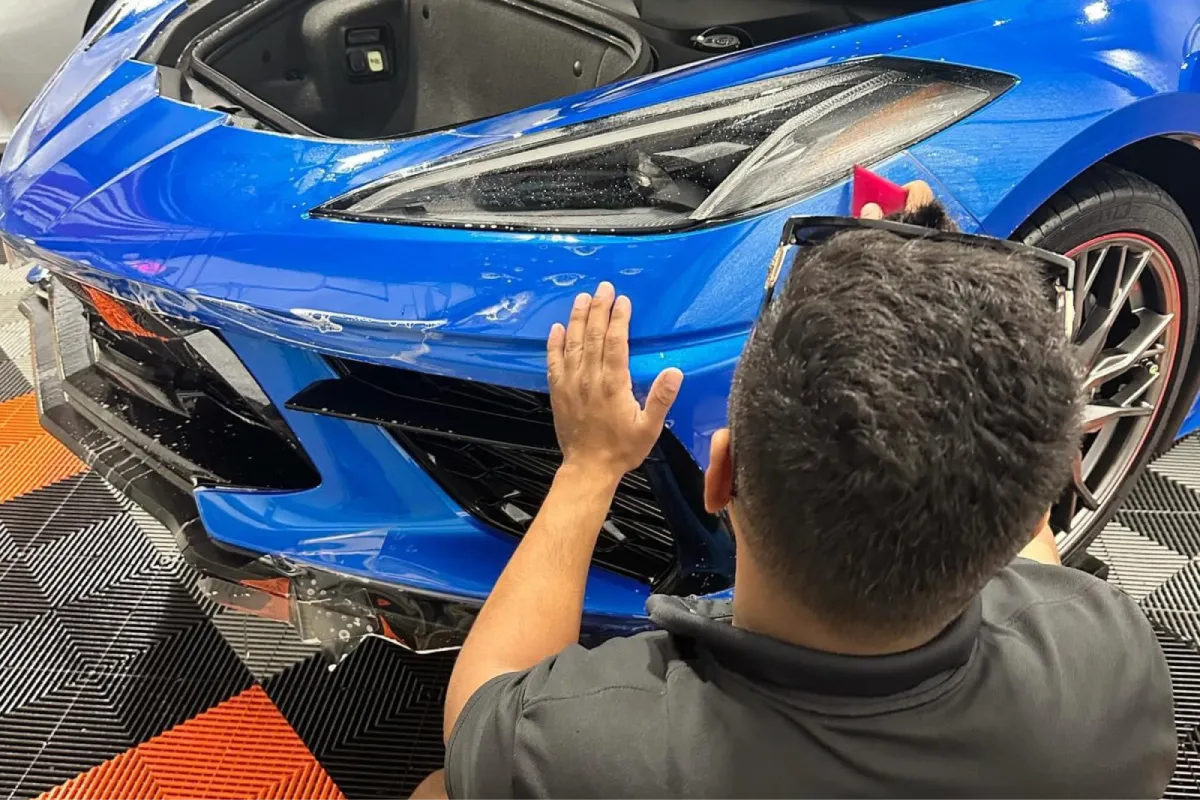
Generally, wait 48 to 72 hours before washing your car after paint protection film installation, though some manufacturers recommend waiting up to seven days. The exact waiting period depends on the film manufacturer, installation conditions, and your installer’s instructions. Washing too early can disturb the adhesive bond, affect film edges, and interfere with the curing process.
Why You Should Wait Before Washing New PPF
Paint protection film is a transparent polyurethane material applied to painted surfaces to help prevent damage from rock chips, road debris, bug splatter, and light scratches.
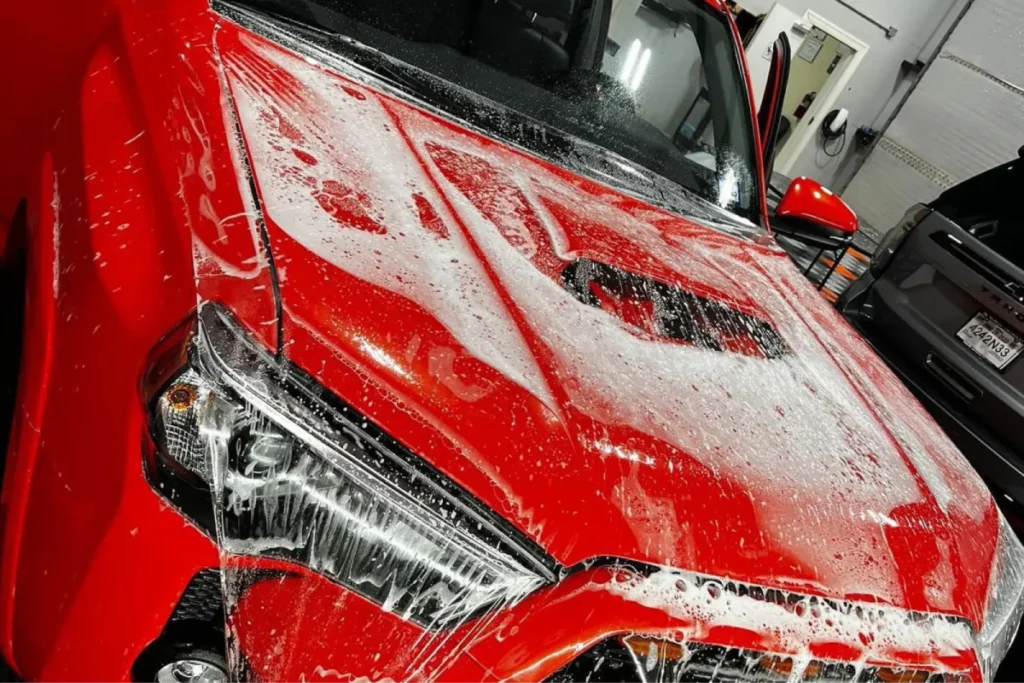
During installation, technicians use an application solution to position the material accurately. They then remove excess moisture while smoothing the film over the vehicle’s contours.
Although the film may appear fully attached, its adhesive continues to develop a secure bond as the remaining moisture evaporates.
Washing too early can cause several problems:
- Edge lifting: Strong water pressure may disturb areas where the adhesive has not fully settled.
- Trapped moisture: Premature pressure or handling can interfere with the evaporation of installation solution.
- Film movement: Aggressive cleaning may affect sections that are still stabilizing.
- Surface scratches: Rough towels or brushes can leave marks on the protective surface.
Allowing sufficient curing time helps preserve the installation’s appearance and performance.
How Long Does Paint Protection Film Take to Cure
Paint protection film in Rio Grande Valley, TX curing is the process during which the adhesive bond stabilizes and residual installation moisture gradually dissipates.
The timeline varies by film formulation, temperature, humidity, installation technique, and coverage area.
The following table provides general aftercare guidance.
| Time After Installation | Recommended Care |
| First 24 hours | Avoid washing, rubbing, or applying pressure. |
| 24 to 48 hours | Continue avoiding washing and unnecessary contact with film edges. |
| 48 to 72 hours | Gentle washing may be permitted if the manufacturer approves. |
| Days 4 to 7 | Follow any extended curing restrictions. |
| After the approved waiting period | Begin regular maintenance with film-safe cleaning products. |
Important: Always follow your installer’s instructions, especially if your particular film requires a longer waiting period.
What Happens If You Wash Your Car Too Early
Washing immediately after installation does not necessarily ruin the film, but aggressive cleaning increases the risk of adhesion problems.
Water Can Affect Film Edges
High-pressure water can enter beneath exposed edges, potentially weakening the adhesive and causing sections to lift.
This risk increases when you position a pressure washer too close or direct it toward a seam.
Aggressive Cleaning Can Damage the Surface
Automatic car wash brushes, dirty wash mitts, and abrasive towels can scratch the film’s topcoat.
Some premium products for paint protection film in Rio Grande Valley have self-healing properties that help reduce certain light surface marks. However, this feature does not protect against every type of abrasion.
Moisture May Remain Beneath the Film
Small moisture pockets or temporary haziness may appear after installation.
These conditions often improve naturally as the film cures. Avoid pressing, puncturing, or attempting to remove trapped moisture yourself.
If unusual marks persist or worsen, contact your installer for an inspection.
How to Wash Your Car Safely After PPF Installation
Once the recommended waiting period has passed, gentle hand washing is generally the preferred cleaning method.
Following the correct process helps remove contaminants without damaging the film.
- Park in a shaded area
Allow the vehicle’s exterior panels to cool before washing. Cleaning hot surfaces can cause water and shampoo to evaporate quickly, leaving noticeable spots.
- Rinse away loose dirt
Use a gentle stream of clean water to remove dust, sand, and loose debris.
Avoid directing concentrated pressure toward edges, seams, and corners.
- Use a pH-neutral automotive shampoo
Choose a cleaning product approved for your particular film.
A suitable automotive shampoo removes ordinary contamination without relying on unnecessarily aggressive chemicals.
- Wash with a microfiber mitt
Move a clean microfiber mitt gently across the panels, starting at the top and working down.
Rinse the mitt frequently to prevent accumulated particles from scratching the protective surface.
- Rinse and dry carefully
Remove remaining shampoo with clean water.
Dry the vehicle using a plush microfiber towel or suitable automotive air blower. Avoid rubbing aggressively around film edges.
Consistent, gentle washing helps maintain the appearance of protected surfaces.
Should You Use an Automatic Car Wash With PPF
Hand washing is generally safer than using an automatic brush car wash on a PPF-protected vehicle.
Different cleaning systems expose the material to varying levels of friction, chemical strength, and water pressure.
| Washing Method | Suitability for PPF | Main Concern |
| Gentle hand wash | Recommended | Excessive friction from dirty towels |
| Touchless wash | May be acceptable | Strong chemicals and water pressure |
| Brush automatic wash | Best avoided | Surface scratches and edge lifting |
| Pressure washing | Use with precautions | Water entering beneath film edges |
| Waterless washing | Use cautiously | Abrasive dirt being dragged across the surface |
Always check whether your film manufacturer permits automatic washing.
Even after curing, repeated exposure to aggressive equipment may affect the material’s appearance.
What Should You Do If It Rains After PPF Installation
Rainfall shortly after installation does not necessarily damage paint protection film.
Ordinary rain exposure differs from scrubbing the surface or directing concentrated water pressure toward newly installed edges.
However, the material should still be handled carefully while its adhesive stabilizes.
If rain occurs during the initial curing period:
- Allow the vehicle to dry naturally when practical.
- Avoid rubbing wet film with a towel.
- Do not pressure wash areas containing fresh film.
- Inspect visible edges without pulling or pressing.
- Contact your installer if significant lifting develops.
After the approved waiting period, rain residue can be removed through gentle hand washing.
How Often Should You Wash a PPF-Protected Vehicle
Most regularly driven vehicles benefit from washing approximately every one to two weeks.
However, the ideal schedule depends on driving conditions, outdoor parking, and how much contamination accumulates on the exterior.
Vehicles exposed to insects, bird droppings, tree sap, or heavy road grime may require more frequent attention.
Contaminants should not remain on the surface unnecessarily because prolonged exposure can increase the likelihood of staining.
Regular, gentle cleaning is often better than letting heavy buildup build up and requiring aggressive scrubbing.
Remember that paint protection film is not maintenance-free. Although it helps protect painted surfaces, routine care remains necessary.
Common PPF Aftercare Mistakes to Avoid
Incorrect maintenance can affect the film’s appearance and potentially shorten its service life.
Avoid these common mistakes:
- Using harsh chemicals: Strong solvents and abrasive compounds may damage the protective topcoat.
- Spraying directly at film edges: Concentrated pressure can contribute to lifting.
- Scrubbing dried contaminants: Too much friction can leave visible marks.
- Ignoring lifted corners: Small adhesion problems may become worse without attention.
- Applying incompatible products: Certain waxes or coatings may not suit specific film finishes.
- Skipping inspections: Periodic checks help identify concerns before they become more serious.
Following the manufacturer’s instructions and consulting your paint protection film installer in Rio Grande Valley when issues arise helps preserve the film’s protective performance.
Protect Your Vehicle With Black Diamond RGV
Waiting the recommended amount of time before washing helps protect newly installed paint protection film. Proper curing, gentle cleaning, and regular maintenance preserve its appearance and protective performance.
At Black Diamond RGV, we provide professional paint protection film in Rio Grande Valley, TX, using XPEL technology designed to help protect automotive paint against rock chips, road debris, and everyday exposure.
As an XPEL-certified, veteran-owned, and family-operated business, we offer protective solutions tailored to different vehicles and coverage preferences.
Ready to protect your vehicle’s finish? Contact us today to explore your paint protection options and request a quote.
Frequently Asked Questions
Can I Wash My Car 24 Hours After PPF Installation in Rio Grande Valley, TX?
Generally, no. Most manufacturers recommend waiting at least 48 to 72 hours, while some require longer. Drivers in Rio Grande Valley, TX should follow their installer’s instructions before washing.
Does South Texas Heat Affect New Paint Protection Film?
Heat can influence moisture evaporation, but it does not eliminate the required curing period. Vehicle owners in Rio Grande Valley, TX should follow the manufacturer’s recommended washing schedule regardless of outdoor temperature.
Where Can I Get Professional PPF Installation in Rio Grande Valley, TX?
Black Diamond RGV provides professional paint protection film installation in Rio Grande Valley, TX. The company offers XPEL protective film options for different vehicle coverage needs.
Can You Drive Immediately After PPF Installation?
Generally, yes. Most vehicles can be driven once the installer approves their release. However, avoid unnecessary contact with newly installed film and follow any precautions provided during pickup.
Can You Apply Ceramic Coating Over Paint Protection Film?
Yes, compatible ceramic coatings can be applied over certain PPF products. The film must be appropriately prepared, and any required curing period should be respected before coating application.