Texas Window Tint Laws Explained (2026 Update)
Why This Matters in South Texas
The Rio Grande Valley bakes under relentless sun, and tinting your car windows feels like a necessity rather than a luxury. Proper tint reduces heat and glare, protects interiors, and adds privacy. But if you go too dark or ignore state rules, you risk tickets, failed inspections, or even impoundment. Texas laws can be confusing—some drivers think 5 % tint looks cool until the police write a fix‑it ticket. This guide cuts through the myths and explains exactly what’s legal, what isn’t, and how to stay compliant across Hidalgo County, McAllen, Harlingen and Brownsville.
Quick Summary: Texas Tint Rules at a Glance (2026)
-
Windshield: Non‑reflective tint only above the AS‑1 line or top 5 inches; must transmit ≥25 % of light and reflect ≤25 %.
-
Front side windows: Must allow ≥25 % visible light transmission (VLT).
-
Back side windows: Any darkness is allowed on passenger vehicles and SUVs as long as the vehicle has dual outside mirrors.
-
Rear window: Any darkness allowed if dual mirrors are installed; otherwise must meet the same 25 % VLT/reflectivity limits.
-
Reflectivity: Front and rear side windows cannot be more than 25 % reflective.
-
Medical exemptions: Allowed with a doctor’s signed statement; you must carry it in the car and present it during inspection.
-
Penalties: Fines start around $20 and can climb to $275 or more for repeat offenses; in Brownsville, officers may impose on‑the‑spot fines up to $500 and even impound the vehicle for repeat violations.
If you only read one section, this is it: stay above 25 % VLT on front windows and never tint below the AS‑1 line on your windshield.
Understanding VLT: How Dark Can You Go?
Visible Light Transmission (VLT) measures how much light passes through the glass and film combined. A high VLT number means lighter tint, while a low number means a darker tint. Texas law requires front windows to let in at least one‑quarter of visible light. Rear windows can be any darkness, but reflectivity must stay below 25 %. Keep in mind that factory glass may already be slightly tinted, so adding film can drop the total VLT more than you expect.a
| Window location | Legal VLT (%) | Notes |
|---|---|---|
| Windshield | ≥ 25 % above AS‑1 line | Strip cannot extend below manufacturer’s AS‑1 line; no red/amber/blue tint. |
| Front side windows | ≥ 25 % | Combine glass and film to meet minimum VLT. |
| Rear side windows | Any darkness | Must have dual outside mirrors if darker than factory glass. |
| Rear window | Any darkness (dual mirrors) | Without mirrors, must meet the 25 % VLT/reflectivity rule. |
| Reflectivity (all side windows) | ≤ 25 % | Ensures tint isn’t mirror‑like. |
Windshield Tint: The Most Common Violation
Texas allows a non‑reflective strip across the top of the windshield above the AS‑1 line. This strip must let at least 25 % of light through and cannot be red, amber, or blue. Anything below the AS‑1 line is illegal, and adding a dark tint across the entire windshield is a guaranteed inspection fail.
Medical Exemptions: Who Qualifies and How
If a medical condition makes you sensitive to light, you can apply for a medical tint exemption. According to the Texas Department of Public Safety, you need a signed statement from a licensed physician or optometrist identifying the person needing the tint and stating that darker tint is necessary for their health. The exemption statement must be kept in the vehicle and shown during inspections or traffic stops. Note: Texas no longer issues separate exemption certificates; the doctor’s note is sufficient.
Penalties for Illegal Tint: Tickets, Fines & More
Going too dark isn’t just a slap on the wrist. First‑time tickets typically cost $20–$25, but repeat offenders can face fines up to $275. In Brownsville, local police emphasize compliance: fix‑it tickets require you to remove illegal film, and fines can reach $500 with the possibility of impoundment for repeat violations. Illegal tint can also cause inspection failures, leading to time and money lost on re‑inspection.
Are Tint Laws Enforced Differently in the RGV?
Enforcement varies by county and city. Border communities such as Brownsville and Harlingen often experience stricter checks because DPS troopers and local police view dark tint as a safety and smuggling concern. Brownsville’s own guidelines warn of higher fines, mandatory removal, and even impoundment. Drivers near the Mexico border report more frequent stops than those farther north. In general, expect stricter enforcement near border checkpoints, and play it safe with lighter tint.
What Tint Percentage Should You Choose?
Choosing your tint is a balance of comfort, privacy, and legal compliance. Here’s how the most common choices stack up in South Texas:
| VLT option | Pros | Cons |
|---|---|---|
| 5 % (Limo) | Maximum privacy, excellent heat rejection | Illegal on front windows; high risk of tickets and inspection failure. Only legal on rear windows with mirrors. |
| 20 % | Dark look, good heat reduction | Still illegal on front windows (below 25 %); night driving can be difficult; attracts police attention. |
| 35 % | Comfortable shade, acceptable visibility; meets legal requirements in many states | Slightly darker than Texas front‑window limit, so still risky; may pass in some inspections but not legal. |
| 50 % | Light tint meets VLT requirement (≥25 %) on front windows; reduces glare while staying fully legal | Less privacy; less heat rejection compared to darker films. |
| Ceramic films (various VLT) | Superior heat and UV rejection with lighter appearance; improves signal reception | Higher cost; must still choose a legal VLT; doesn’t allow you to exceed VLT limits legally. |
Expert tip
If you want the best heat rejection while staying legal, a ceramic film around 35–50 % VLT is ideal. It provides significant cooling without dropping below the 25 % legal limit on front windows.
How Professional Installers Keep You Compliant
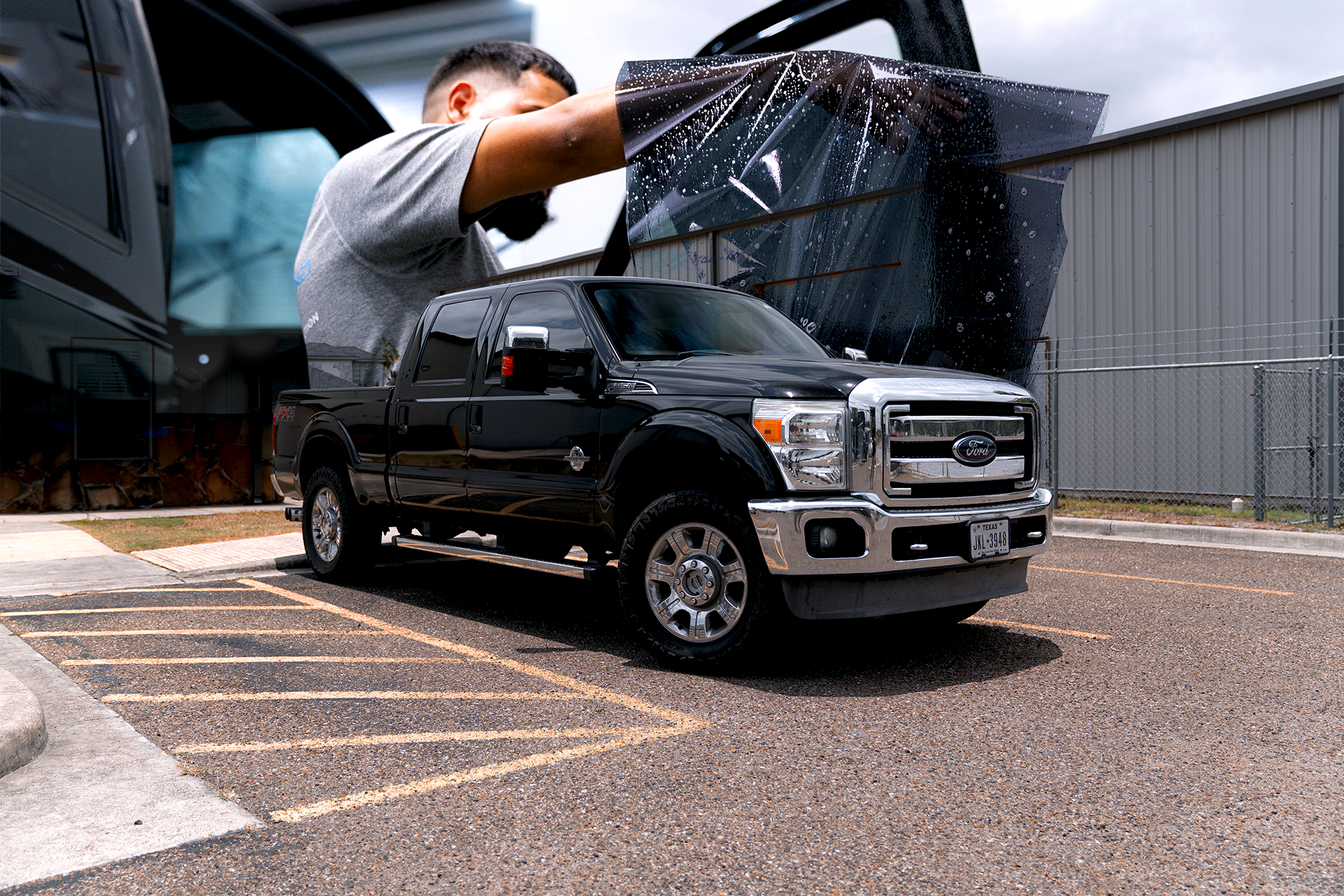
DIY tint kits often leave drivers with illegal darkness or bubbles that fail inspection. Black Diamond RGV uses calibrated tint meters to measure VLT before and after installation, ensuring your windows meet the 25 % VLT requirement. Our techs understand local enforcement patterns around McAllen, Harlingen, and Brownsville, so they help you choose a film that balances heat reduction, privacy, and strict compliance. We also guide you through medical exemptions and install compliance labels per Texas law.
professional window tinting in McAllen, Harlingen & Brownsville
FAQs
Is 5 % tint legal on any window?
No. 5 % VLT (limo tint) is far below the 25 % required for front windows and windshields. It is allowed only on rear side windows and rear window if you have dual mirrors.
Will factory tint count toward the VLT?
Yes. The law measures the combined VLT of glass and film. Factory tint is usually around 70 %, so adding a 35 % film may drop your total below 25 %.
Can cops pull you over just for tint?
Absolutely. Dark tint is a primary enforcement reason in Texas; officers use tint meters to check VLT and can issue tickets on the spot.
Does ceramic tint change legality?
No. Ceramic films still must meet VLT and reflectivity limits. Their advantage is better heat rejection and clarity without going darker.
Can I tint my windshield if it’s clear?
Only the top 5 inches or area above the AS‑1 line can be tinted, and it must be non‑reflective and allow ≥25 % VLT.
Conclusion
South Texas’ blazing sun makes window tinting a smart choice, but going too dark can cost you money and hassle. Stick to legal VLT percentages, understand windshield strip rules, and carry documentation if you have a medical exemption. Enforcement in Brownsville and border counties is stricter, so lighter tint reduces the chance of being stopped. When in doubt, consult a reputable installer who measures your windows and understands the nuances of Texas law. If you’re unsure what tint is right for your vehicle and want to stay legal in South Texas, it’s worth speaking with a professional.
Experience the benefits of Ceramic Window Tint at Black Diamond RGV. Call us today to schedule your appointment.

- Texas Window Tint Laws Explained (2026 Update) - January 28, 2026
- Why We Choose FEYNLAB® CERAMIC Coating - July 31, 2024
- Cost Analysis and Long-Term Benefits of Solar Window Tint - July 22, 2024